I used to love driving long distances. Road trips were almost a necessity growing up in Michigan where the closest thing worth visiting was half a dozen hours away. Maybe an older age or road trips in several foreign countries has shifted my perspective, or maybe Nevada is simply the bane of my existence (seriously that State’s only benefit is Vegas and I don’t even gamble). The 12 hour drive Memorial Day weekend from Salt Lake to Southern Oregon was not only one of the longest treks I have attempted but also the most gruesomely boring drive through the most hellish landscapes in perhaps the entire country. Seriously, I imagine my drive similarly to how Frodo felt crossing the Marshes of the Dead, disturbed by the desolate and unwelcome nature of the land. I have no idea how the Skywalkers tolerated growing up on a desert planet with literally endless sand plains beyond the borders of major cities. At least my drives in Wales and Costa Rica had something to see. Nevada is a barren wasteland. The mere 4 hours of sleep the night before due to my movie premiere didn’t help, to be fair, nor only stopping for gas the entire trip.
This will be a unique story in the sense some of it will be written as it is experienced. I am currently waiting at the Crater Lake Lodge to meet family, the purpose of my visit to this bucket list state, while detailing the first half of my ventures. It’s my first solo trip in a while and is a bit of a last minute plan, an invitation texted only a month before. It’s also the least prepared and planned trip I have ever been on. I have no idea where I am sleeping tonight or the night after, a rare occurrence I find rather refreshing. It came at the tail end of planning a group trip for a dozen friends to the Tetons that embarks in a few weeks, so unfortunately my focus has been on that. But I also partially decided to consider what so many of my friends have recommended before, and let the adventure guide me. Don’t meticulously plan out every detail. So I did. Unfortunately, I have yet to reap any of that strategy’s benefits.
Crater Lake was always on the docket, so my preparations began around the fact that I’d be meeting family Saturday evening. Initially I considered a visit to Bend for Smith Rock, a destination I have long known about from the rock climbing community. Adding an extra 2 hour drive from Crater to Bend, however, seemed a task rather avoided. Through my minimal research I discovered Crater Lake about halfway down the Rogue-Umpqua Scenic Byway, the “Highway of Waterfalls” and an appealing alternative itinerary.
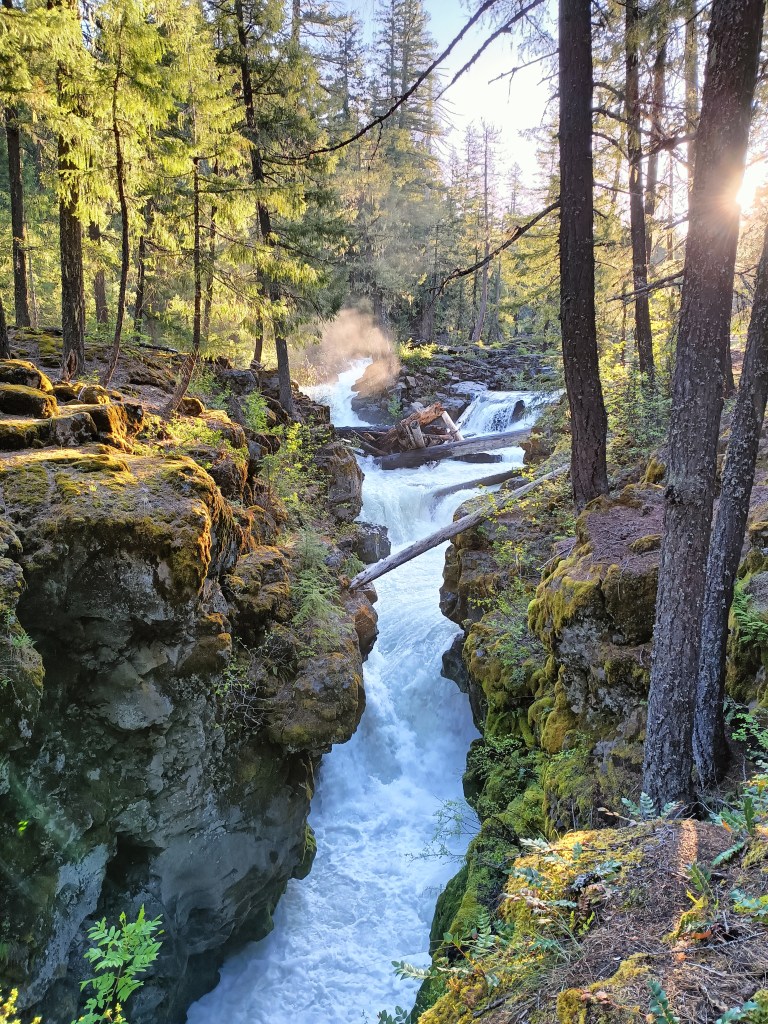
The guides I briefly skimmed recommended starting the Byway from Northern Roseburg but its proximity to Salt Lake led me toward Southern Medford. I figured I’d visit the noted stops along the way to Crater and reduce any unnecessary backtracking. The guides listed estimated times spent at each destination, so I believed I’d have enough to work with to keep me occupied until Crater. Unfortunately I found the opposite true. All the waterfalls that made the Byway famous, I found out the hard way, cascade in the northern sections of the Byway, and that the few notable stops along the south are quick half-mile hikes usually to a raging river. I don’t intend to downplay the Rogue River. What I saw of it was gorgeous, but what I saw of it also only took not even a couple hours total to explore, despite the guides saying the stops should be 60 minutes each. I was meant to have a whole day before my Crater Lake meeting. I found a boulder field on the route for a brief rock climbing session, but its heavily undeveloped and mossy rocks also lacked content to keep me occupied for long.
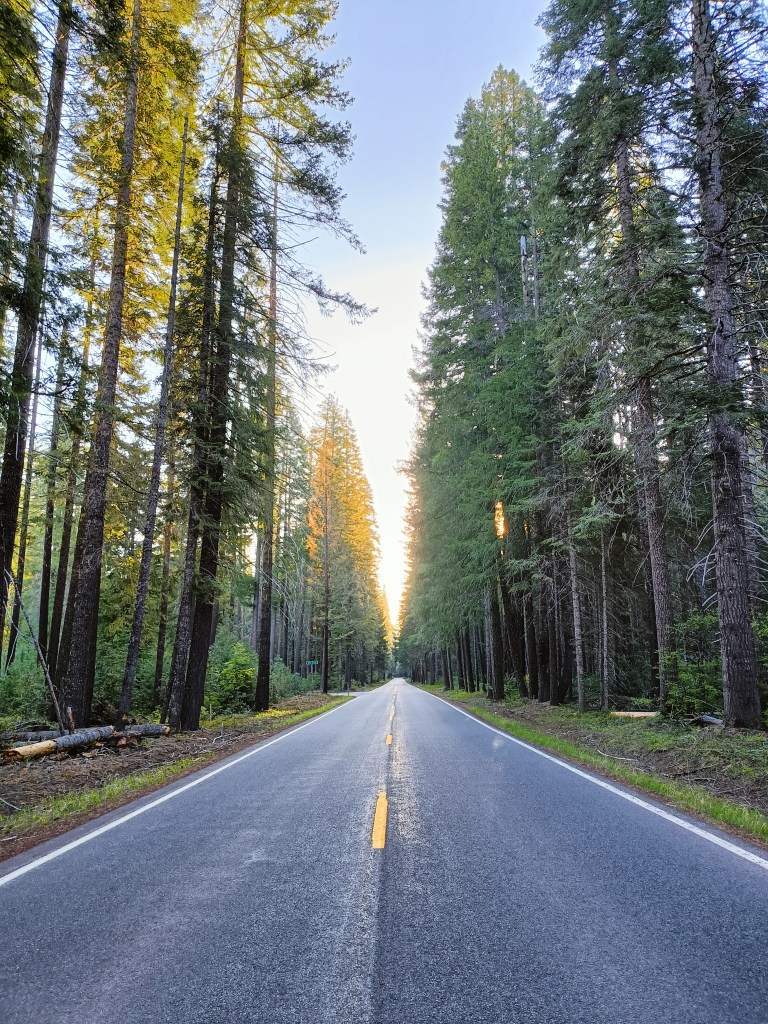
Even the drive itself I found subpar to expectations. It wasn’t until around a town called Shady Cove did the road transition into a scenic environment of forestry, 22 miles into the drive if you begin where Google Maps identifies as the start of the Byway in a town called Gold Hill. The underperforming drive literally inspired me to research the qualifications for a Scenic Byway, which outlined that it’s not just about the road but also the history, archaeology, culture, recreation, and natural qualities of the area. I guess that definition efficiently supports the reasoning behind this Byway’s naming, even if it lacked in the actual “scenic” department in my opinion. Perhaps calling an early day was for the best after the drive I had endured. The extra rest might grant me a morale boost.
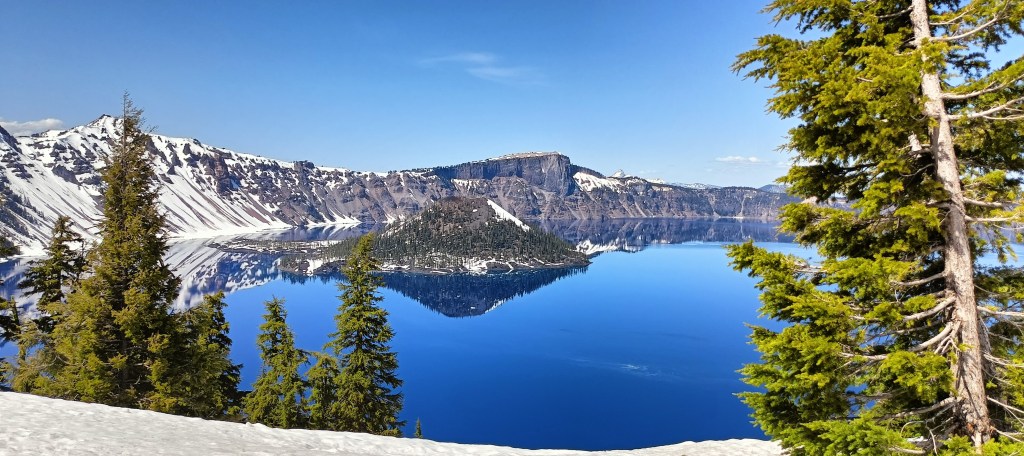
But then I hit Crater Lake. My intention wasn’t to arrive until a couple hours before the meeting, but the lack of activities in the lower half of the Byway lured me there 8 hours earlier. Maybe I am not used to exploring mountains yet, but I grossly underestimated the snowfall waiting for me, which means I also underestimated the available excursions the Park offered; I arrived to find snow piled up higher than some of its buildings. I was already under the impression that Crater’s only worthwhile hike was the trail to the lake itself, a trail that I knew would be closing down after the season for a couple years of renovations, and one of the primary reasons I wanted to go. When I first heard that news, I reached out to a relative, my beta reader, who has lived in Oregon for the past several decades, and she informed me she was already planning a trip there over Memorial Day, inviting me to join. To discover that even that was closed now for heavy snow remaining on the trail made me briefly question the worthiness of my trip. The views of the Lake from the rim were angelic when I could see beyond the towering walls of snow, but not being able to witness for myself the purity of its waters, to me, defeated half the purpose of visiting. In the end, I came ultimately not for the park but for the family, distant relatives I only see once every few years.
These complications caused by lack of preparation forced me to pursue correcting a personal flaw, talking to people. To clarify, I often struggle with conversing with even my closest friends. In any group setting, unless the topics Star Wars, Ninja, Hawaiian shirts, Doctor Who or traveling are mentioned, (or I am directly addressed) I become a silent listener. In the circumstances I have joined other random conversations, I have rarely been the igniter. This trip forced me to seek out strangers, potential locals or fellow tourists that have thoroughly planned their vacation, for suggestions to fill out my weekend.
Now, there was no way I was going to wait around Crater Lake all day so I returned to waterfall highway and progressed further than initially scheduled, one hour north of Crater Lake to Diamond Lake per suggestion from one of the aforementioned locals. I was going to backtrack a significantly longer distance than I would have liked to, especially considering the hiked up prices for fuel in Diamond Lake. To make matters worse snowfall prevented me once more from maximizing my experience of the lake, the loop around closed off. The Lake’s only offering was a boat launch I was able to quickly dip my feet into.
The longer north I drove the further I’d have to retrace my steps, so I made my way back to Crater Lake. I found a waterfall along the way hidden in a maze of forest service roads allowing for one more quick detour that’d delay my return to the Park slightly longer. It was a majestic view overqualified for a half mile hike, albeit short-lived. With naught else on the road, I returned to Crater Lake Lodge with 2 hours to spare, spending that time writing this story. I also made a quick trip to the visitor center for the obligatory National Parks passport stamp and Annual Pass (since my card didn’t work at the entry booth and I wanted to still support the park). While in the visitor center, I heavily considered awakening the eternally slumbering beast within me to aggressively confront an impatient tourist shouting complaints that the ONLY employee in the building was taking too long assisting and providing information to those before her, to remind her of the struggles our Parks system and the tension the employees endure daily.
I know my beta reader will be disappointed by my, well, disappointment at my introduction to the state she has called home for the past several decades. I also know Oregon is famous for a reason. I have seen arguments from its top contributors to this fame. I expect this second half to significantly shift my opinion of the state. I just simply can’t imagine 15 cascading waterfalls in under 100 miles or the rumored Hot Springs recommended by the front desk at the Crater Lake Lodge underrepresenting the beauty of the “Beaver State.” I expect the family dinner to be a much needed catch up, one of the highlights of the weekend. But I guess I’ll just have to wait and see.
———-
The dinner plan was to meet with 2 aunts, first cousins once removed, and one of their best friends, a former marine biologist employee of the Park. When the time to meet arrived, I discovered I had already ‘met’ this fourth guest, once in the Park’s video presentation on the history of the Lake, though his 30 year old resemblance in the video made it impossible to recognize him. In fact, I met him again, unknowingly, in the lobby of the lodge while writing the first half of this story. I knew he would be present before venturing to the Park, and had a couple questions prepared for him, interested in a Park employee’s perspective. But I would not address those questions until much later. I hadn’t seen my family in some time after all.
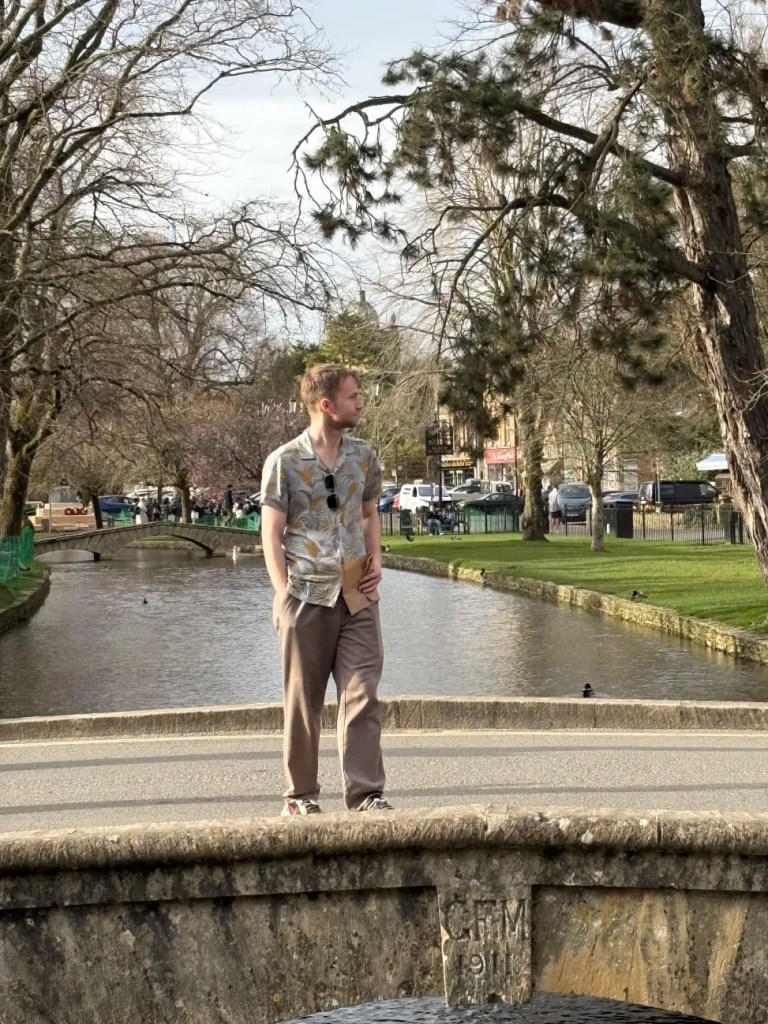
My presence was meant as a half surprise, a successful attempt. One of my aunts had no idea I’d be there, and likely didn’t recognize me at first while donned in my fancy floral-themed suit inspired by my daily Hawaiian shirt wardrobe. As predicted, the dinner was a much needed catch up. I couldn’t remember the exact timeline, but I didn’t even know one of her children was dating let alone now married, and the last time I saw her was at the wedding of another of her children, so it’s been a solid near decade; we both had a lot to share.
She knew I traveled a lot, following my adventures via social media posts, so the dinner conversations naturally shifted toward that topic several times. I had also shared a few correspondence with the other aunt directly, detailing my travels beyond the capabilities of the character-limited posts, in the form of this story you are reading now. She is my beta reader. If it isn’t obvious yet, I love talking about travel. I love hearing about travel. This wealth of experiences surpasses any monetary value. I would have spent that entire dinner talking about any of the 14 countries I have experienced, or listening to any of the dozen of my aunt’s own travel stories.
Perhaps that is why the biggest highlight of this dinner were the tales from the former Park Employee, the moments I would remember the best. Hearing of his adventures skiing off the top of the Lodge, skiing in every month of the year at the Lake, diving to the bottom of the deepest lake in the states, some people might wish they lived such a life as he has. I consider my imagination so vast and creative that I can insert myself into those adventures, and I can thus in a way feel those experiences as he told them. Hearing travel stories are some of the most immersive experiences I can enjoy. They are also inspirational motivators. In fact, it’s partially for this same reason I decided to embark on this travel writing journey: friends who have read my social media posts have reported their newfound inspiration to travel the world as I have. Hearing travel stories inspires me to travel more, telling travel stories in turn inspires others, and this is a cycle I will perpetuate for as long as I am able.
I impressed the retired park employee with my memory of the informational video, restating facts to him as the questions arose, like the record-breaking 130 foot visibility and the 1900 ft depth (although my estimates for this latter fact were slightly mixed up by the former, and I thus initially answered with a 1300 ft depth). Unfortunately, when I addressed my questions to him about the state of the park post Trump layoffs, he lacked any insider information. He still had friends in the park, and he is even still active with the training of new recruits, but the layoffs, as a retiree, had no effect on him. I discussed my experiences and differences on how foreign national parks are handled, seeking a way for the states to learn from those systems, but that topic ended quickly as well. That was okay, I wasn’t expecting much anyway.
Just as thrilling as the discussions proved, I’ll review the cuisine similarly. I am generally a picky eater, and while at home I often repeat weekly meals. While on vacation however, I not only try to always eat out at least once to taste local food, but I pick something unlike any of my regular eats. I played it safe with my main entree, choosing a pork dish, however I let the preferences of my companions influence the appetizers and desserts. As such, I experienced for the first time the surprisingly smooth and piquant taste of Mussels. I can consider this meal a rectifier for my failure to brave escargot whilst visiting Paris.
The dinner discussions extended beyond the table as we strolled through the Park, talking about family, the future, and my life since moving to Utah. I would be seeing both of those aunts later in the summer, allowing time for more meaty talks, but I heard what I needed to that weekend. Honestly, all that mattered to me in that moment was sharing that time with them, no matter what discussions we shared. My move to Utah hasn’t been the friendliest experience, so just seeking familiarity and comfort of family, if only for a few hours, was enough to justify a 12 hour road trip. And despite its rather lackluster start, this trip and my reception of this reputable state shifted, likely to the delight of my beta reader, after this reunion.
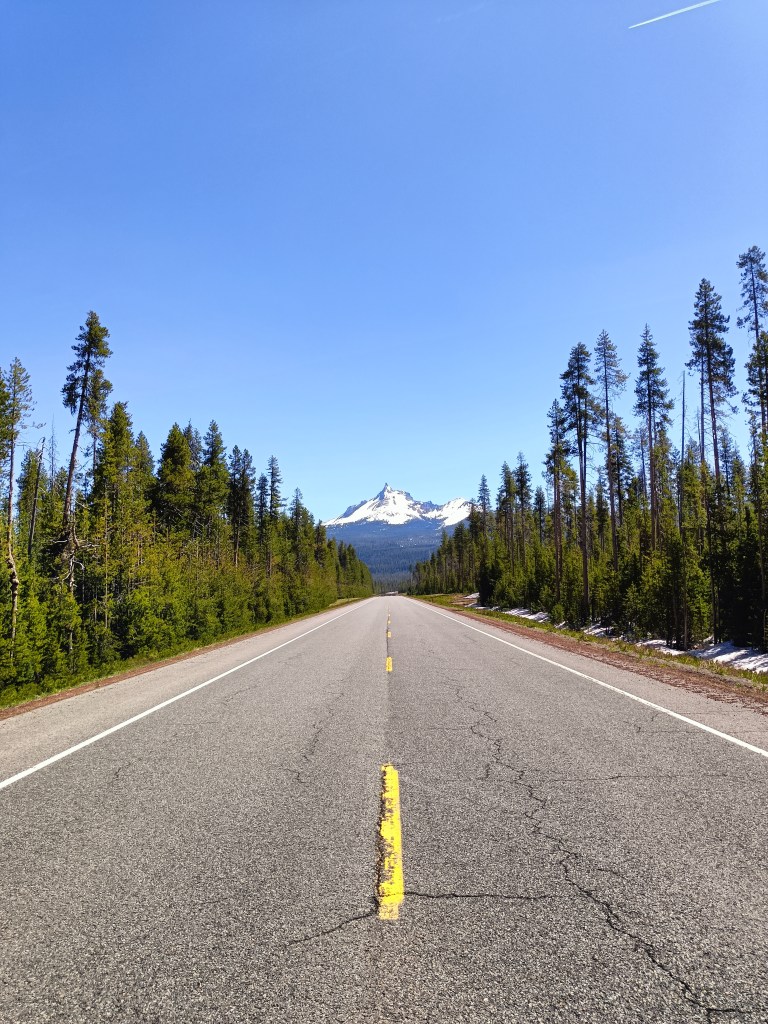
I woke up the following day in a nearby Sno-Park, lots Oregon uses to provide parking during the winter season for recreational areas, though still freely available for use the rest of the year. It’s a unique experience, waking up to Mt. Thielsen symmetrically towering over the road as one approaches Diamond Lake, its dawnlit peaks a moodsetter for the rest of the day. Without access to data and google maps, at the time I couldn’t locate the existence of several falls between Crater and Diamond Lakes, so I drove first to the recommended Lemolo Lake. The drive led me to a KOA campground that forbid approaching the lake without checking into the campground, which I obviously had no reservation for, so wasting that drive, I returned to the Rogue-Umpqua. Following signs I had found along the highway, and a generic guide I quickly glimpsed online before my trip, the first falls I found was Clearwater. Although I hadn’t realized it yet, I discovered a very unfortunate truth at this introductory representative of Oregon’s waterfall highway, that the hikes to and from their parking lots were quick and smooth, and the amount of time spent there was significantly shorter than the 60 minutes recommended on the guide. For many of the waterfalls, I do wish I had taken advantage of their peaceful atmospheres longer, especially given my solitude. I wish I hadn’t just rushed through them, spending only slightly more time than it took to snap a few post-worthy photos. I knew there were many stops to make and wanting to experience all the falls without knowing the time constraints of each of their approaches meant rushing through a few. Not only that, I wanted to soak in the Hot Springs before the crowds.
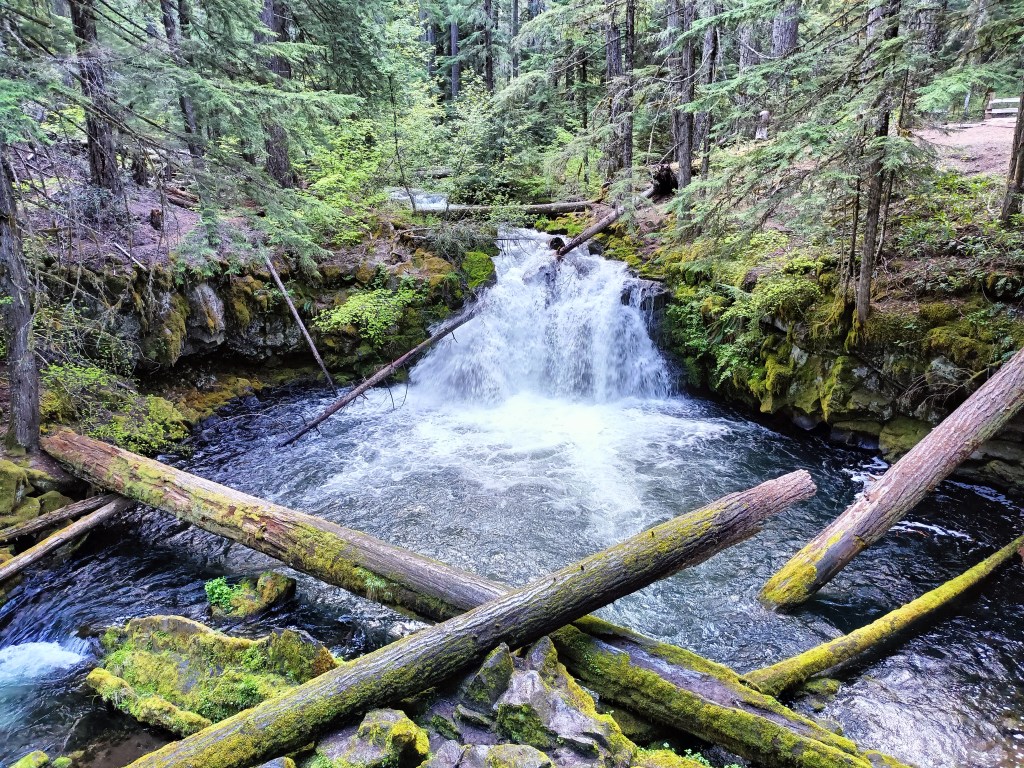
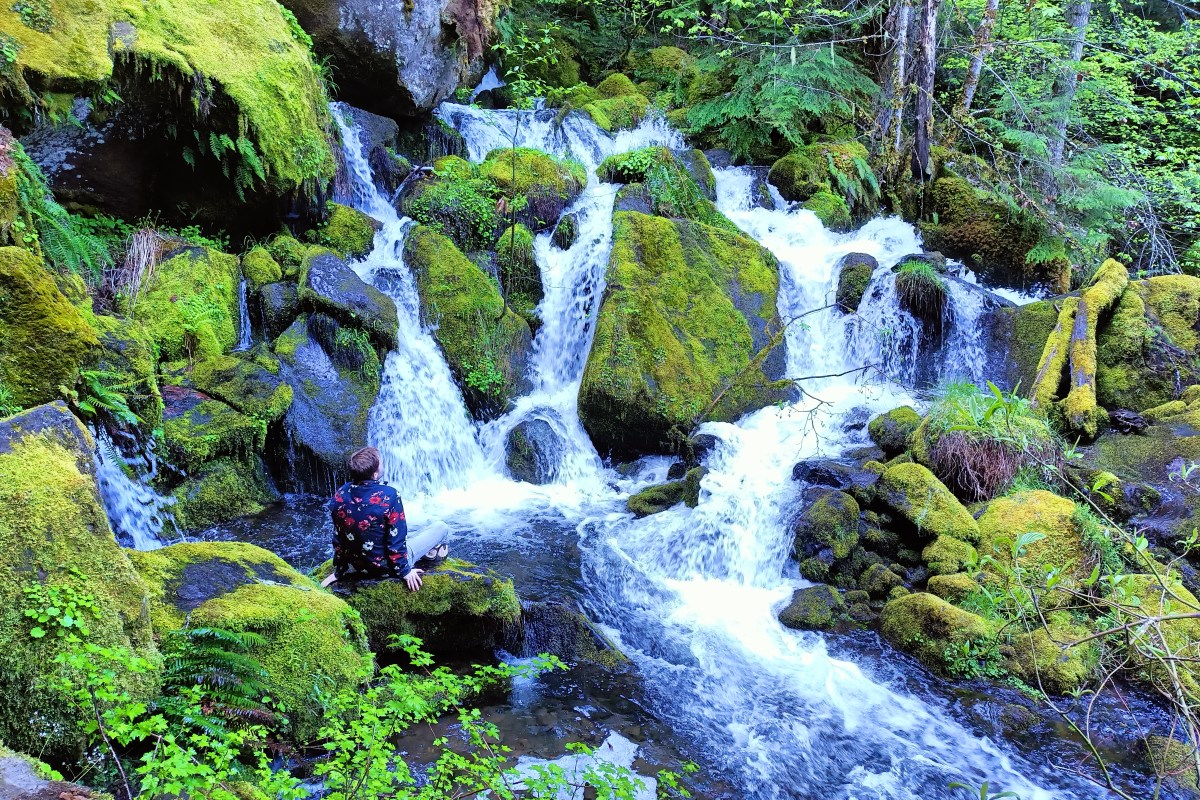
Less than a mile down the road from Clearwater Falls was White Horse. This rather short waterfall offered a close approach and enhanced views by almost symmetrically fallen lumber. These first two dwarf falls may not bear the suitable qualities necessary for a trip highlight classification but they proved satisfactory warm up acts to the headliner.
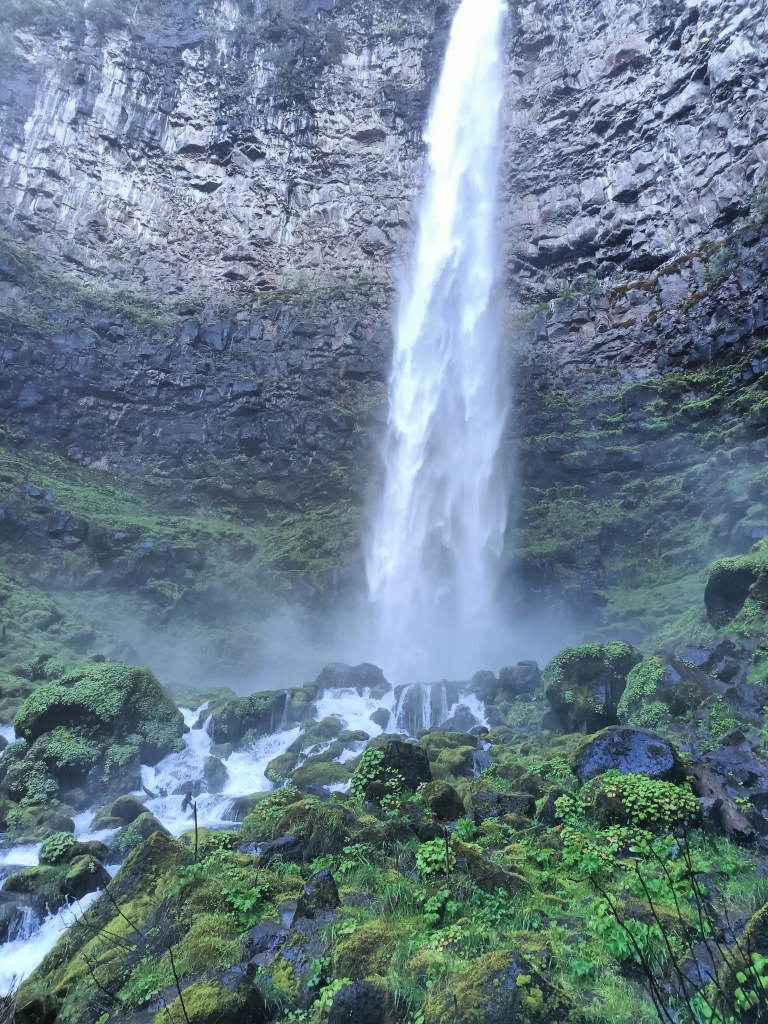
The Rogue-Umpqua Highway is home to the third tallest Falls in the State of Oregon, Watson Falls. Nature’s cries bawl down 272 feet of endless tears in this towering beauty, pounding aggressively into the pools below and granting an illusion of rain amid a sunny day. The impact soaks any approaching visitor before they even reach its base, challenging photographers with damp lenses but waking up overnight boondockers testing new air mattresses that seemed to randomly deflate and interrupt their slumber (this trip served as a trial run for my vehicle’s ability to support potential long-term living, and clearly revealed some needed adjustments). Watson Falls is the first time I met another adventurer that day, allowing for picture-taking trades; she snapped a few on my own, I snapped a few on hers. I brought a tri-pod, but its inflexible legs limited the positions and angles I could take pictures of myself, without assistance, and without the entire contraption tipping over. The presence of this second visitor thus proved a savior. Between all the falls I visited that day, I spent the most time here. On my way out, I found an alternative path leading higher up the cliff for a dryer viewpoint of the falls, allowing for a peaceful Falls-gazing experience without taking collateral damage.
Succeeding Watson Falls was one of the few researched destinations for this trip’s minimal planning, the Umpqua Hot Springs. The hot springs are tucked away deep in a National Forest, 4 miles from the main road. Unfortunately signs directed and alerted drivers of its existence so its isolation did not reduce crowds. This highlight started rough; arriving at the parking lot I found countless vehicles parked along the main road, beyond the designated parking lot, despite signs forbidding parking there. I was able to claim official parking in the lot, thankfully. However, there was a charged fee for Day Use. My only seemingly dictated method of payment though was via an mobile app that I would have neither been able to download nor even use in the signalless national forest. I scouted the windshields of other vehicles and counted how many also did not have a pass, leaving the chance of a parking ticket in Fate’s hands like another couple just arriving.
Hiking a couple miles from the parking lot to the springs offered a chance to dry off slightly after Watson’s assault, to refresh in the early morning hours. I imagine the still damp clothing and skin eased the hike, so categorizing the difficulty of the hike would not be very accurate from me. I don’t recall any tenuous inclines or unfenced clifflines. I will say, however, that I passed people of all backgrounds both during the hike and at the springs, kids and adults alike. So it’s safe to conclude that the hike is family-friendly.
Arriving at the springs offered several pools to choose from. Desiring to relax alone for a bit first, I reduced those options down to one. Although that remaining spring was the most picturesque, located at the lowest edge of the cliff, its beauty proved a double edged sword: it was also the coldest spring of the bunch.
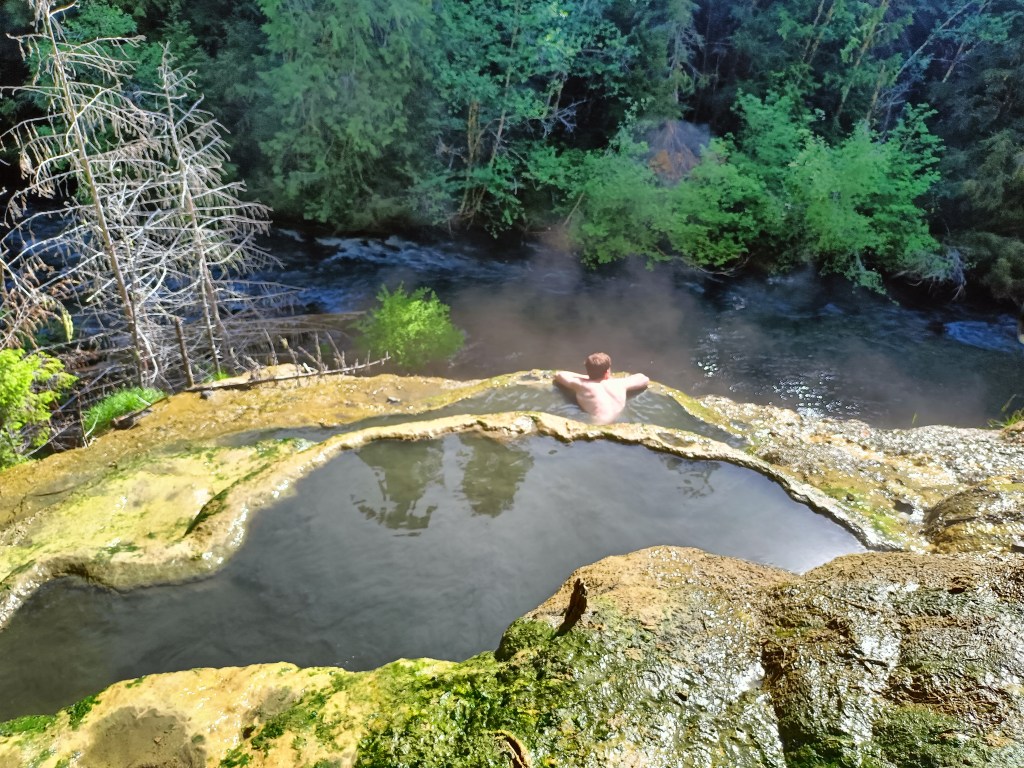
The crowds increased rapidly. It quickly became near impossible to claim an entire pool for myself now, so I returned to higher elevation and warmer pools, regrouping with the couple I had greeted in the parking lot. I discovered another surprise when entering the pool: the adventurer I met on the Watson Falls trail now rested in the same pool as me, an Asian woman not much older than me.
Our conversations mostly included hiking adventures, how one witnessed the near tragedy of a fellow hiker unprepared for the challenging conditions of Mt. Saint Helen’s, her water depleted and the threat of exhaustion and dehydration creeping ever closer. I talked about the many glamorous trails of the Utah Desert too popularized in the past years and now requiring permits, which lead to talks of the infamous Havasu Falls in the Grand Canyon, a hike so popular and isolated that only a few hundred in the world can venture it a year. Some Portlanders talked about their adventures up Mt. Rainier, compelling stories that made me wish my visit to Seattle hadn’t resulted in only weather that completely concealed the mountainous giant. As stated before, participating in conversation is a weakness I’m working on and my strength is in listening. An unfamiliar sight, however, occasionally distracted me from even listening efficiently.
Several sources warned me ahead of time of Oregon’s lax policies on clothing-optional attire in public spaces. When I arrived at the hot springs, some part of me was relieved to find everyone else appropriately clothed. Some other part of me, however, was disappointed to find no one taking advantage of those policies. Visiting a nudist beach isn’t necessarily something I have actively avoided, it’s just never been something I have particularly cared to experience. When I heard about the possibility of a nudist encounter, I realized I couldn’t imagine how I’d react in such a situation, and answering that question is another thing that intrigued me about the hot springs. While the conversation about hiking trails lingered on, I spotted an elderly gentleman relieved of all but a shirt, roaming the pools. I surprisingly found myself mostly unaffected by the sight. Any initial discomfort came from the fact that I never saw him enter a pool and believed he had walked out there naked for no other reason than just for the sake of it. He apparently had dipped into a pool briefly, according to those I conversed with, and thus I found myself otherwise unbothered by his presence. No one else complained, at least publicly, and I think looking back on it now, it’s because I was warned ahead of time about the possibility of such a sighting (and thus mentally prepared) that I also had accepted the sighting indifferently.
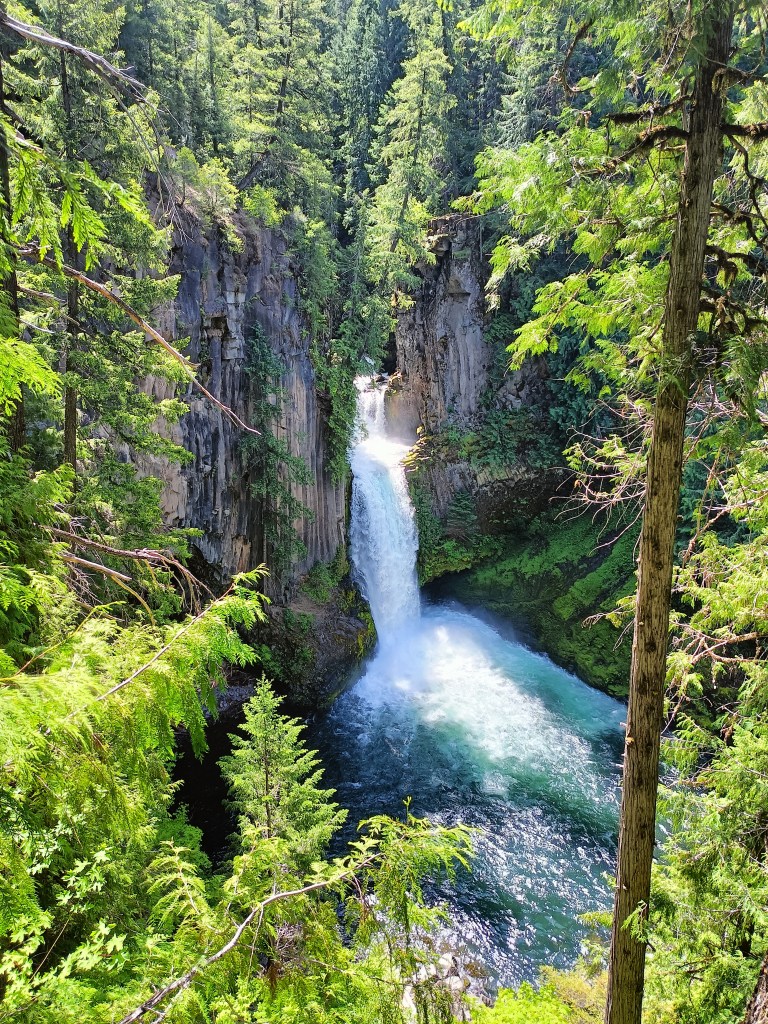
Eventually the fear of a parking ticket ended my peaceful rest at the springs. I hurried back to the car, eager to get back on the road. I recalled spotting another waterfall at the base of the road leading to the springs and made another pit stop at Toketee Falls. There I reunited once more with the Asian woman but this time other familiar faces from the springs accompanied me. Toketee Falls is rumored to be arguably more popular than the majestic Watson Falls, perhaps a result of its shorter approach, but my vote went to the latter. That’s not to say Toketee was a disappointment. It possesses its own qualities worthy of a visitation, hosting a viewpoint that frames the Falls for you, the branches of nearby trees circling the Falls like the border of a picture frame. Realizing here that the Asian woman and I had the same plans, we walked together to and from the Falls, essentially becoming temporary best friends. We progressed through the rest of the Rogue-Umpqua Highway together.
Our next meeting was at Falls Creek Falls, a picturesque beauty offering a peaceful atmosphere unlike many of the falls witnessed previously. At its base was a small landing hosting a preinstalled bench crafted from logs, allowing perfect opportunities for a photo op style I have adopted throughout many of my travels: a self-portrait facing away from the camera, staring off into the distance. The Asian woman arrived as I prepared to leave, and we both agreed it’s among the best of the highway. Her late arrival revealed a Falls I had somehow skipped, but that she assured me was not at all impressive anyway. We walked back to the cars together, essentially becoming best friends, deciding to discuss more personal topics.
Interested in travel stories and foreign cultures, I asked her for suggestions on her motherland and her Chinese heritage. She in turn strongly advised me to put China as far down the bucket list as possible. As a dual citizen, she still has family in China, and every time she visits she has to prove her citizenship. Apparently, in China, you have to replace every mobile app with China-approved apps, meaning I wouldn’t have access to financial institutions from the States and I wouldn’t be able to convert currency unless I was a member of a local bank, memberships that required proof you were Chinese. It’s a country unfriendly to tourists, requiring several challenging work arounds to bypass their strict policies. Although I never got her name, the conversations I shared with her were some of the highlights of my trip (if you somehow miraculously come across this story, thank you for the company. And that Asian Drama I watch, I told you I thought its name was Kill Me Softly, its name is actually Kill Me Love Me).
I also asked her about the difficulties of moving to a different country, where she informed me it’s likely easier for me to do so than it was for her, despite my lack of a proper career. She offered recommendations, some of which I had already considered, like teaching English as a Second Language. She also mentioned travel writing or blogging, which I obviously also had already explored. A new option mentioned however was to heavily research various countries of interest, learn their related policies for immigration, and only once I have my heart set on a country, work from there; figure out the more favorable or possible parh. I always had my heart on moving to Japan one day, but seeing that it’s among one of the most restrictive countries in the world, seeking alternatives may be a smarter path.
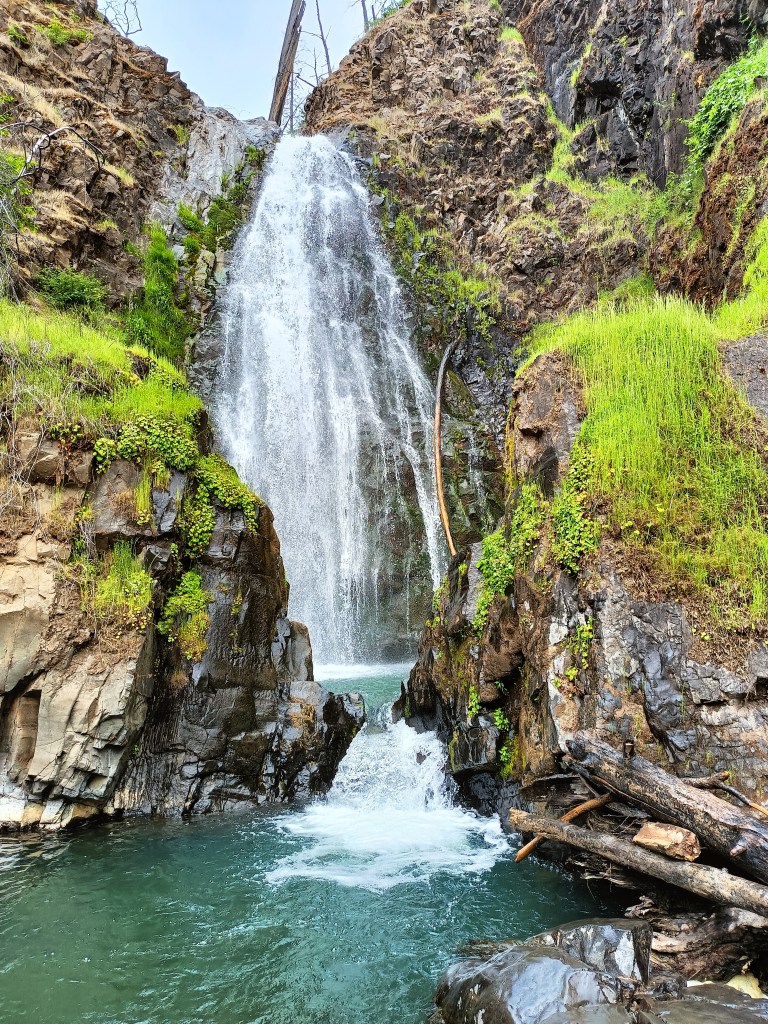
We ended our time together at Susan Creek Falls. Another quick Falls tainted by fallen trees that also served as a bridge to a closer approach, the Falls themselves hid beyond a narrow rift. The beautiful, unique sight, perfectly concluded the journey across the 172-mile Rogue-Umpqua Highway nicknamed the “Highway of Waterfalls.”
When I arrived at Roseburg, I regained phone service and was alerted of a text from one of the aunts I met at Crater Lake. She informed me of their plans to forage for mushrooms in Oakridge. I didn’t have any further plans for the rest of my trip, the highway was meant to take longer to explore, so meeting them at Oakridge seemed as good an idea as any other. They inevitably cancelled that activity after recommendations from locals, though, so I was once again required to improvise. Thankfully, I discovered Oakridge along the way to Bend and had the opportunity and time to pursue my original plan after all. Plus, driving to Bend then meant a shorter drive home later. In contrast to my first day in Oregon, Bend taught me the meaning of love.
Without an itinerary, I resorted to simply exploring what I discovered to be the most glorious peaceful town I have visited in the States. Simply typing “Bend, Oregon” into Google Maps led me to Drake Park, a gorgeous venue surrounding a pond perfect for a quick driving break as I sought out dinner plans. I noticed a few locals chilling in a front yard and perpetuated that experimental behavior to ignite conversation by asking them directly for recommendations. They offered many suggestions but ultimately convinced me toward the Old Mill District at the revelation of an outdoor concert played by the legendary Sting.
The chosen restaurant and the concert stage were divided by the Deschutes River flowing down the middle of the town. I was too far away to see the performance even on the screens but close enough to hear, so I still considered it a free concert. The nearby staff officials seemed unbothered by pedestrians walking down the river listening to the concert, so I paced back and forth repeatedly, mostly in awe of the town, the district, and the absolutely mesmerizing Deschutes, until they eventually closed off the walkway parallel to the river likely due to too many stopping for longer than preferred. That just directed the crowd to the bridge though, where I was dragged into a picture with random strangers for reasons I never discovered. There wasn’t anything the staff officials could do about the countless paddleboarders listening along the river though.
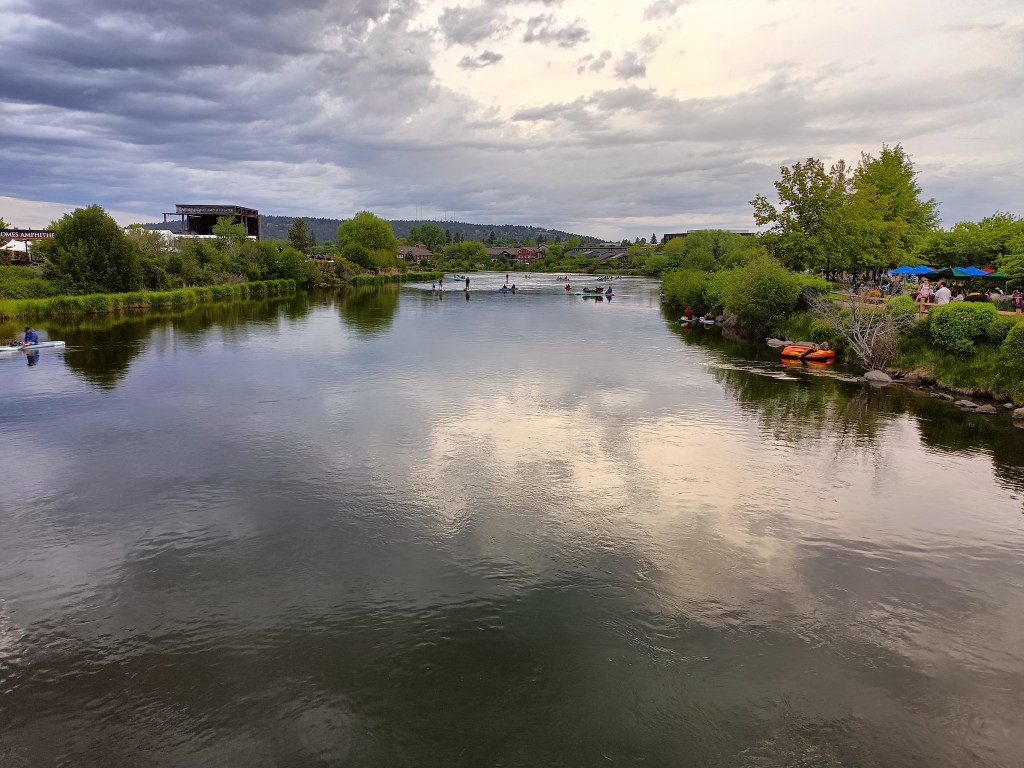
I spent several hours combined between the two days I spent there exploring the Old Mill District and its surrounding areas. Many times when I travel in the States, it is in search of a next home whenever I decide to conclude my tenure in Salt Lake. That mindset drove my desire to simply explore the town and navigate its chaotic road layout instead of pursuing activities like paddleboarding the Deschutes or visiting Bend’s premiere rock climbing destination in Smith Rock State Park. It’s easy to research surrounding activities Bend has to offer, but to fully understand the town is only learned by exploring, and that exploration has helped me effectively see myself living there one day.
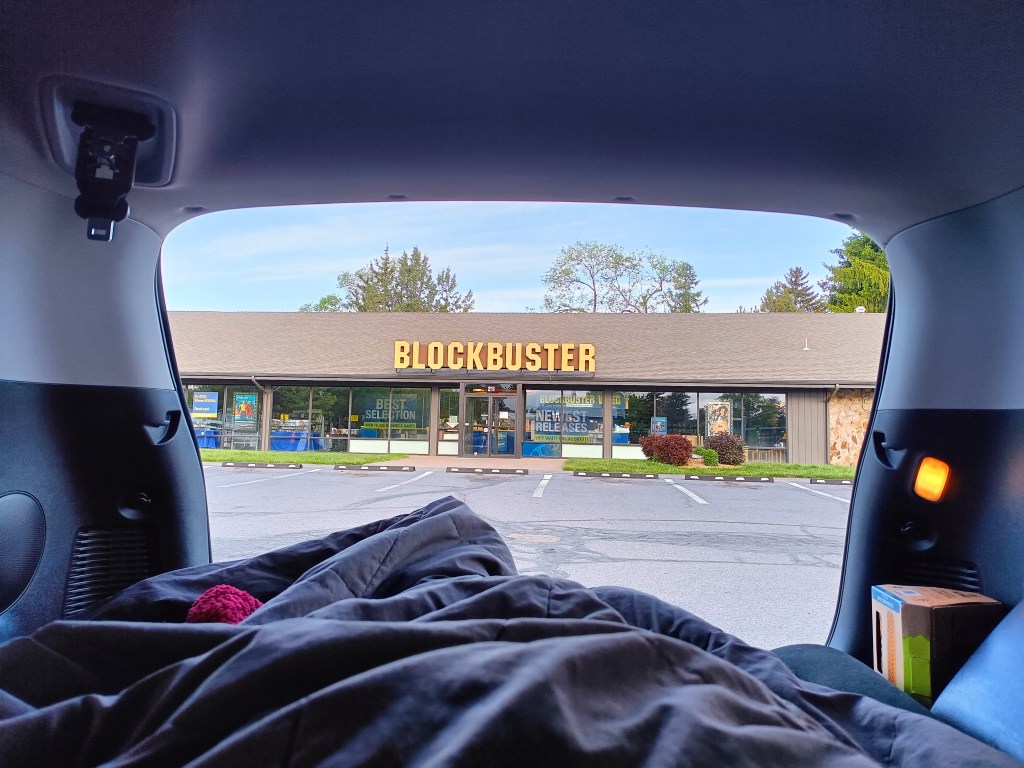
I spent my only night in Bend boondocking in the Blockbuster parking lot. I have no nostalgic attachments to Blockbuster; my hometown hosted several other video rental store chains back in the day. Bend’s blockbuster is the first and only location I will ever visit. I think curiosity mostly influenced my decision to visit, wondering how Blockbuster has stood the test of time in a world where DVD’s and VCR’s now seem archaic. While the store can still be classified as a video rental for the locals, it also now serves as a hybrid merchandise shop and museum, displaying various artifacts from the company’s and the industry’s past. I found movie costumes from Indiana Jones and Back to the Future in glass cases, newspaper articles about Blockbuster’s survival and old movie posters. It’s truly impressive how the company has endured for so long.
Nearing the end of my time in Bend, embarking in a couple hours for a 10 hour return journey, I prioritized one final stop, a store run by one of my Salt Lake friend’s mother up in Redmond about 20 minutes north of Bend. I gave no head’s up to my friend about my arrival, nor to his mother who I had never met before anyway. But he had recommended one of her sandwiches and, given the long drive ahead of me, it seemed like a beneficial visit (and it was. If any of my readers ever find themself in Redmond, check out Schoolhouse Produce.)
I had time for one other recommendation just outside Bend: Pilot Butte that offered aerial views of the entire town and its nearby mountain peaks. Many hike from its base to the top, which I estimate can take maybe 30-45 minutes, but in a hurry I opted for driving to the Butte’s top. The 360° view also revealed to me the route of my upcoming drive, a return to the hellish desert landscapes that I then decided to delay by extending my time at the Butte. But the journey was inevitable.
I have always prided myself in my high level patience and tolerance. I very recently endured a multiple hour-long conversation though with a stranger I had no investment in, that endlessly dragged on despite his continuous comments that he’d let me go, that I was too patient to inform him I had better stuff to do. This same conversation hinted to me that my patience may come at an expense and so now I may act subconsciously to contradict the virtue I have always admired about myself. That has proven exceedingly dangerous and life-threatening, and the events that transpired on this drive as result of this internal struggle are difficult to talk about in person, and will likely never be detailed anywhere other than these upcoming words. The road stretched along a desert in the middle of nowhere on an endless single lane road, one for each direction of traffic. I lacked experience driving on such narrow roads, relatively new still to the grossly unpopulated Wild West compared to the Eastern US where civilization thrived everywhere. The inexperience led to defying my characteristic patience, passing a campervan that when I now look back on it may have been unnecessary; I don’t recall it going much slower than I was, but I chose to pass it anyway, misjudging the distance between myself and oncoming traffic and coming within seconds of risking a potentially fatal accident (I did feel as if my vehicle wasn’t accelerating as fast as it should and I later discovered my floor mat covering part of my gas pedal, so that may have also factored into the near accident). After I avoided the tragedy, I kept going as if nothing happened, not welcoming the opportunity for witnesses to confront me. I didn’t need strangers yelling at me to realize I messed up, and the repercussions of that mistake have distracted me for the weeks since, details I could spend an entire other story analyzing. In summary, discovering that my patience is flawed and that I overcorrect that flaw to extreme and dangerous measures is scarier than the near death experience itself.
 Around the World in Stories